Swiss Regulations Shape Payment Preferences and Tournament Tactics Among Mobile Poker Users
Geschrieben von Elena Otto · 18.8.2026
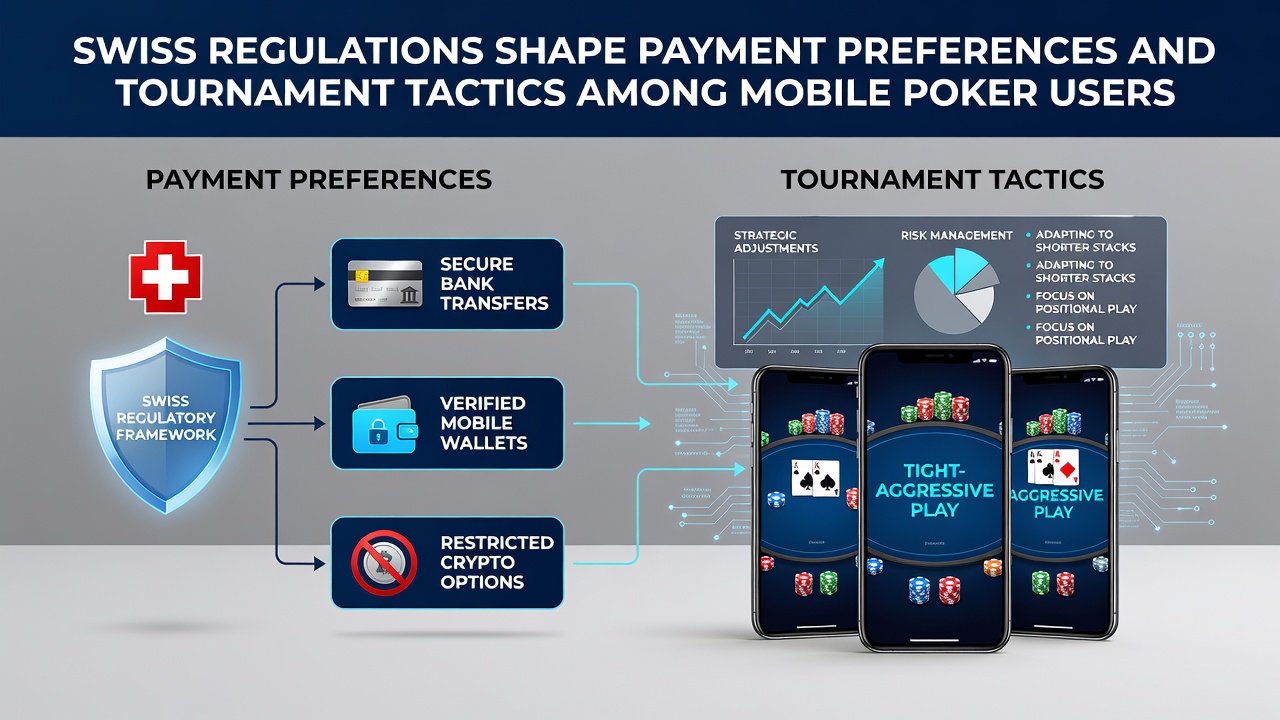
Swiss Regulations Shape Payment Preferences and Tournament Tactics Among Mobile Poker Users
Swiss federal legislation governs online poker through the Gambling Act that took full effect in 2019, and licensed operators must restrict access to users located within national borders while enforcing strict verification procedures that directly influence how mobile players handle deposits and withdrawals. These rules require platforms to partner only with approved financial institutions and payment processors, which narrows available options compared to unregulated markets and encourages reliance on domestic solutions such as Twint alongside traditional bank transfers.
Mobile poker applications connected to Swiss-licensed servers therefore integrate fewer international e-wallets because regulators prioritize traceability and anti-money laundering controls, and data collected by the Swiss Federal Office of Justice indicates that compliance costs have shifted user behavior toward methods that complete transactions within the same banking ecosystem. Players who frequently switch between devices find that these approved channels reduce friction during quick sessions, yet they also limit flexibility when moving funds across borders.
Payment Method Shifts Driven by Licensing Requirements
Regulated operators cannot accept credit card deposits from certain foreign issuers without additional checks, so many users default to prepaid vouchers or direct bank links that align with Swiss data protection standards, and observers note that transaction logs must remain accessible for audits that occur at regular intervals. This environment has increased adoption of instant local transfers, while slower international methods decline in popularity among those who play on the move and value speed between hands.
Studies conducted by academic researchers at institutions outside Switzerland reveal similar patterns in other tightly controlled jurisdictions, where mobile users gravitate toward systems that minimize documentation uploads after the initial registration, and Swiss operators have responded by streamlining Twint integrations that verify identity through existing bank relationships. Figures released in industry reports show that deposit volumes through these channels rose steadily as enforcement tightened, whereas cryptocurrency options remain largely unavailable on licensed platforms.
Tournament Structures and Strategic Adjustments
Because Swiss rules cap the size of guaranteed prize pools and restrict cross-border player traffic, tournament fields tend to be smaller and more consistent in skill distribution, which alters optimal push-fold ranges and blind-stealing frequencies that players employ on mobile interfaces. Those who participate regularly adjust their aggression levels to account for tighter competition, and software tools provided by licensed sites often include region-specific statistics that reflect these altered dynamics rather than global averages.
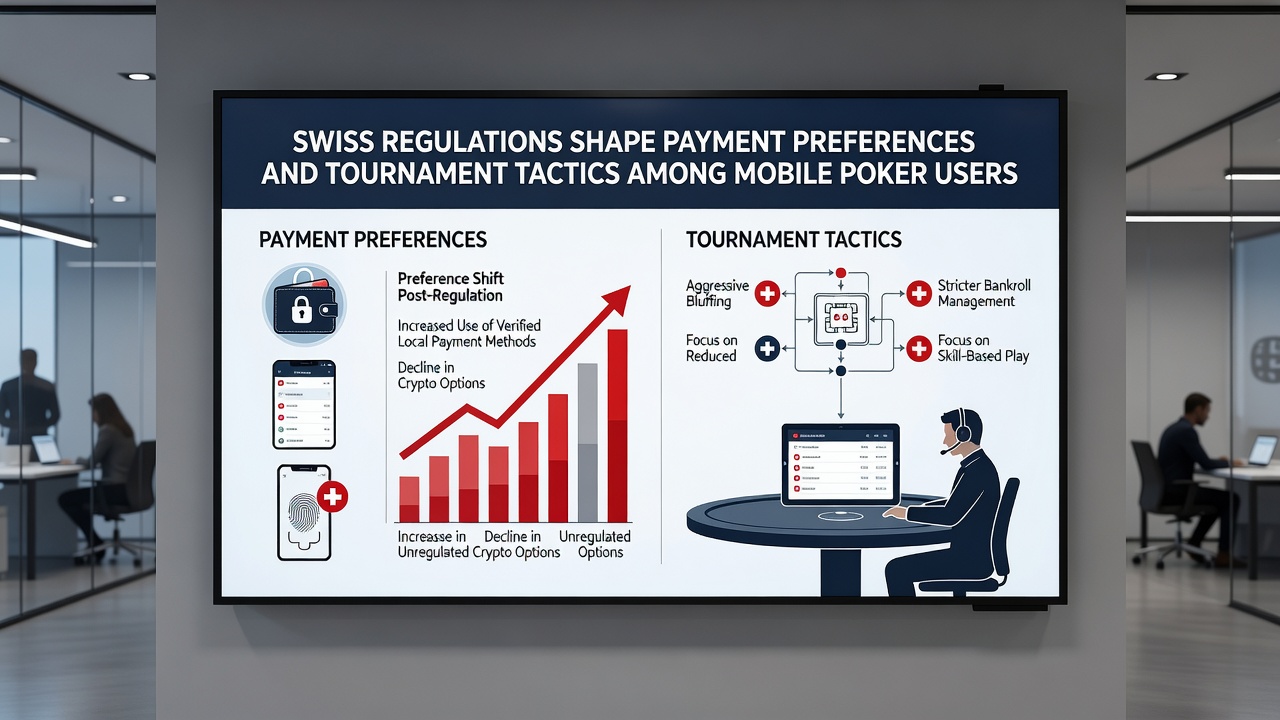
Multi-table tournaments scheduled during evening hours draw participants who prefer shorter commitment periods, and the absence of large overlay guarantees changes the way experienced users calculate expected value when deciding whether to register late or early. Data collected from platform analytics demonstrates that average stack depths at final tables differ from those observed in larger unregulated markets, prompting shifts in post-flop decision-making that mobile interfaces must accommodate through simplified bet-sizing options.
August 2026 Regulatory Updates and Market Implications
Amendments scheduled for implementation in August 2026 will require additional transparency around rake structures and player-fund segregation, and these changes are expected to influence how operators design satellite tournaments that feed into larger live events. Mobile users may encounter revised deposit limits tied to verified income thresholds, which could further standardize payment preferences around methods that already comply with enhanced reporting protocols.
Industry organizations such as the European Gaming and Betting Association have published comparative analyses showing how similar updates in neighboring countries affected user retention, and Swiss regulators have referenced these findings when drafting the upcoming rules. Tournament organizers anticipate adjustments to starting stack sizes and blind levels that align with the new compliance framework, allowing players to maintain familiar tactics while meeting updated verification steps at the registration stage.
Mobile-Specific Considerations Under Current Rules
Device fingerprinting and geolocation checks mandated by licensing agreements add layers of security that mobile poker applications must execute seamlessly, and users report smoother experiences when payment methods share the same authentication layer as the gaming session itself. Research indicates that these integrated flows reduce drop-off rates during deposit attempts, particularly among those who switch networks frequently throughout the day.
Operators continue to refine push-notification systems that alert players to upcoming tournaments without violating advertising restrictions, and payment preferences evolve alongside these features as users seek methods that support recurring small deposits without repeated identity checks. External links to regulatory summaries remain available on official government portals, where detailed explanations of permitted transaction types appear alongside compliance timelines.
Conclusion
Swiss regulations continue to channel mobile poker activity toward a defined set of payment solutions and tournament formats that reflect national licensing priorities, and ongoing adjustments through 2026 will likely reinforce these patterns. Observers tracking user behavior across licensed platforms note steady adaptation in both financial habits and strategic approaches, while comparative data from other regulated regions provides context for the changes ahead.